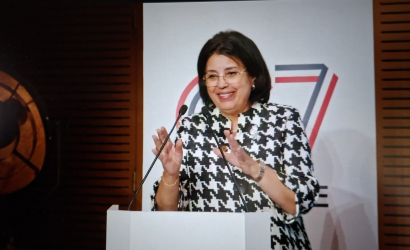

On the occasion of the renewal of her mandate as Chair of UN-Nutrition, Dr. Najat Mokhtar, UN-Nutrition Chair and IAEA Deputy Director General (Head of the Department of Nuclear Sciences and Applications), reflects on key achievements from her first term and shares priorities for the next biennium.
Watch the full interview below and find the interview playlist on UN-Nutrition YouTube. Follow UN-Nutrition on X and LinkedIn for more updates.
Question: Looking back at your first term as Chair of UN-Nutrition, what concrete achievements – or quiet ‘wins’ – do you feel have most strengthened and advanced a unified UN voice on nutrition?
Looking back, I'm proud of how UN nutrition has steadily strengthened coherence across the UN system. One important achievement has been reinforcing a shared narrative on nutrition and the alignment of messaging across global policy forums, including UNGA, ECOSOC, and joint outreach to UN resident coordinators.
At UNFSS+4, UN Nutrition helped elevate nutrition, and healthy diets in particular, as a core pillar of food system transformation. UN nutrition played a key role in ensuring that healthy diets were consistently framed as central to food systems transformation, including through high level dialogues, culturally focused exchanges, and joint engagement with partners. This helped strengthen connections between nutrition, climate, and food systems agendas and reinforced the UN's ability to speak with one voice on nutrition with global food system processes.
These shifts ensured that nutrition was consistently framed as a cross-cutting development priority, not only a health issue, but one linked to food systems, social protection, climate resilience, and science.
Another key achievement has been strengthening collaboration with partners such as the SUN Movement, helping align a global messaging and coordination effort at a time when nutrition needed renewed political attention at country level. Together, these efforts helped advance a more unified, credible UN voice on nutrition.
Another example was the study visit to Brazil organized [by UN-Nutrition and the HDSFS Coalition] for focal points from Africa and Asia to learn from Brazil’s intersectoral approach to nutrition and to equip participants to drive change in their national nutrition policies.
Alongside these outward facing achievements, UN-Nutrition also took time to reflect internally on its role and added value in rapidly evolving global nutrition and food system landscapes. A system wide health check exercise helped confirm what was working well, clarified role across the UN system, and reinforced trust and collaboration among partners. This reflection strengthened UN Nutrition's position and ensured that it remained fit for purpose in supporting countries and global processes with a coherent UN voice on nutrition.
Q: Your first two years as Chair coincided with major global shifts. As you begin your next term, what gives you optimism? And how do these shifts shape your priorities for the next biennium?
One major shift is the growing recognition that nutrition sits at the intersection of multiple global agendas: health, food system, climate, social and protection.
We are seeing stronger political commitment, better use of evidence, and growing awareness that nutrition outcomes depend on coordinated action across sectors. At the same time, global challenges from climate change to economic shocks and rising noncommunicable disease remind us that business as usual is not sufficient.
In the next biennium a key priority will be to translate global commitment into coordinated country level action, aligning UN agency support behind national nutrition policies and priorities. In this second term, my priorities will focus on deepening system wide coherence, strengthening country level support, and ensuring that science and innovation are fully embedded in nutritional policy and programming. UN-Nutrition has a critical role to play in turning global momentum into sustained practical impact.
Q: UN-Nutrition was created to help the UN system align efforts around nutrition, identifying overlaps and filling gaps. What has surprised you most about how the nutrition community has adapted to working more collaboratively? And where do you see opportunities to deepen coherence and collective impact across agencies in the future?
I have been pleasantly surprised by the openness of agencies to work across institutional boundaries where there is a shared purpose.
Nutrition naturally cuts across mandates, and UN-Nutrition has provided a neutral platform where agencies can align priorities, identify complementarities, and reduce fragmentation. Looking ahead, I see strong opportunities to deepen coherence, particularly through joint advocacy, shared evidence platforms, and coordinated engagement with member states.
By working collectively, the UN system can amplify impact far beyond what any single agency could achieve alone.
Q: Strengthening UN-Nutrition’s role and support at the country level has been a recurring priority. What practical steps are needed to make coordination more impactful on the ground in the years ahead? And what stands out as a success so far?
At the country level, coordination must be practical, responsive, and anchored in national priorities. This means empowering UN country team with clear guidance, shared tools, and access to evidence-based solutions.
One success so far has been improved alignment between global frameworks and country level action, including closer engagement with resident coordinators.
Moving forward, strengthening data use, supporting national institutions, and ensuring sustained interagency collaboration will be essential to delivering real results on the ground.
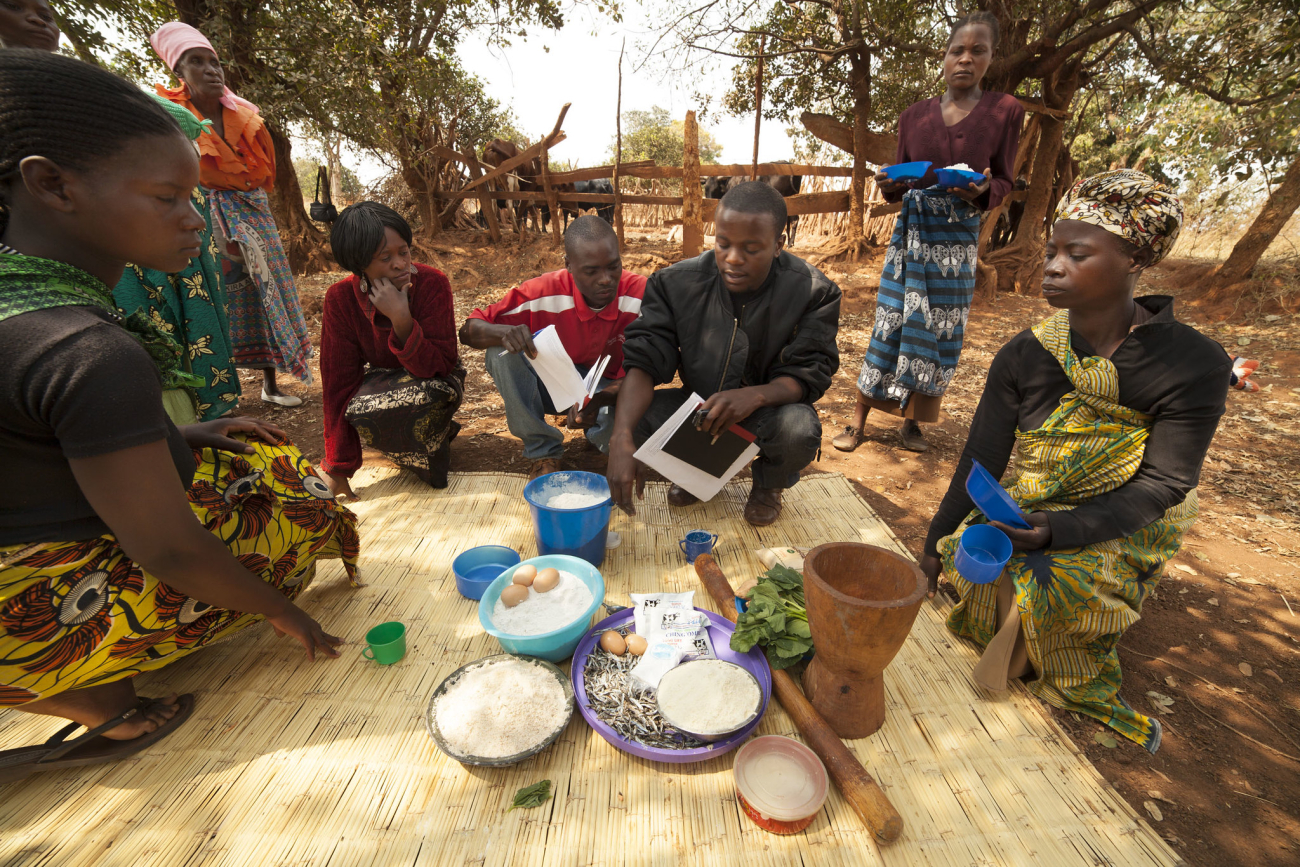
Q: Nuclear science isn’t often associated with nutrition. How would you explain the value of IAEA’s work in improving real-world nutrition outcomes?
Science is central to effective nutrition policy, and this is where the IAEA makes a unique contribution. Nuclear techniques provide precise insights, from measuring absorption of nutrients like iron and zinc, to assessing nutritional status and protein quality in plant-based diets. These insights form evidence for the design and evaluation of effective nutrition interventions. They help countries move from assumptions to data driven decisions.
Looking ahead, such scientific approaches will be increasingly important as countries confront complex challenges including obesity, non-communicable diseases, and early childhood undernutrition. Through UN-Nutrition, the IAEA helps ensure that robust science informs global and national nutrition efforts.
Q: As a scientist and a woman in STEM leading a complex interagency mechanism, how do you see science shaping the future of nutrition?
Science gives us the ability to understand problems deeply and design solutions that work. For nutrition, this means moving beyond one size fits all approaches and towards targeted, evidence-based interventions. The UN also has a responsibility to inspire the next generation, particularly women, by creating inclusive leadership space, mentoring opportunities, and visibility for women scientists and decision makers. Mentorship opportunities are particularly important.
We have made great strides for women in STEM. We must ensure that the lessons we have learned are passed on to the next generation.
When we demonstrate that inclusive science-based leadership delivers better results, it helps to make women's leadership the norm rather than the exception.
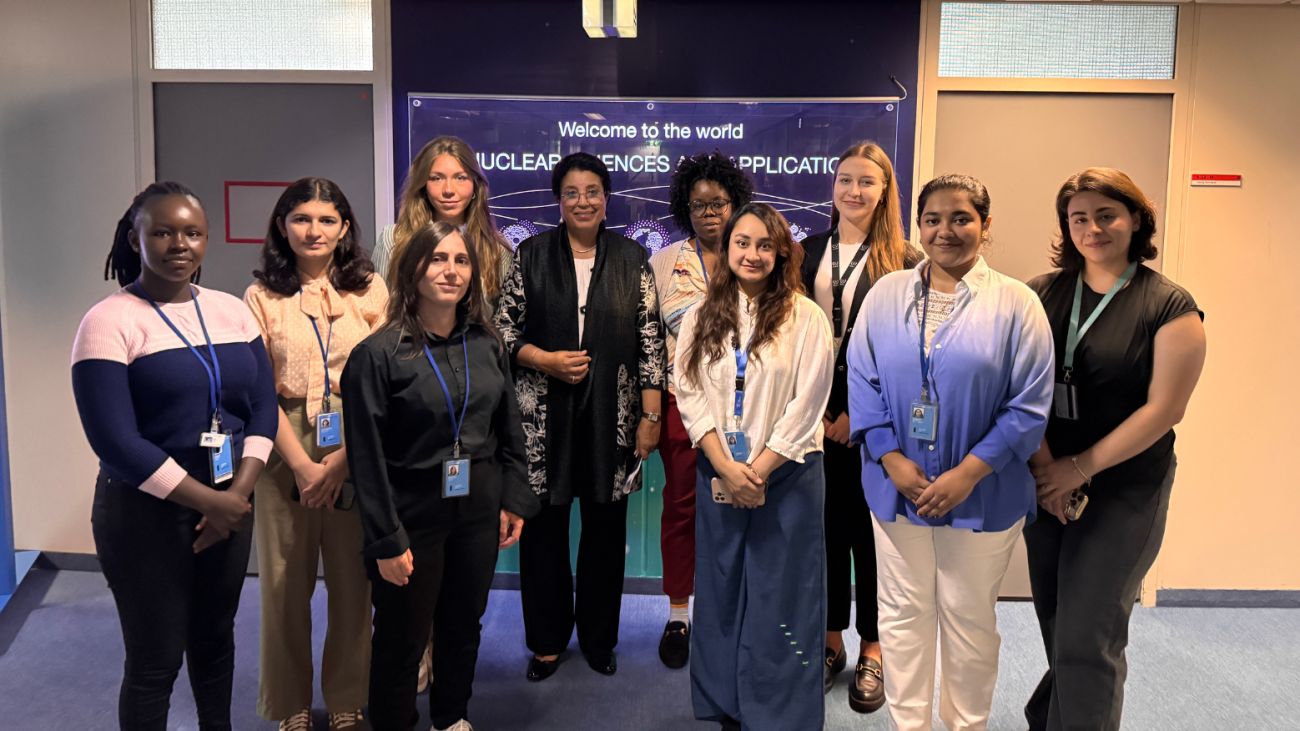
Q: From your early work in Morocco to your current global leadership roles, what has stayed constant in how you view nutrition and the power of partnership and working together toward a common goal?
My understanding of nutrition was shaped very early in my career in Morocco, where I saw how deeply nutrition is woven into people's daily lives, health, education, livelihoods and dignity.
Throughout my career, I have seen that partnerships grounded in trust, evidence and mutual respect are the most powerful drivers of impact. UN-Nutrition embodies this spirit of collective action, and it is a privilege to work to advance that vision. I look forward to our shared achievements over the coming years.