
This International Women's Day, and as the world gathers for the 70th session of the Commission on the Status of Women (9-19 March) we reaffirm a simple truth: gender equality and nutrition are inseparable.
Women are not only disproportionately affected by hunger and malnutrition – they are also central to solutions for healthier, more equitable food systems.
Did you know...?
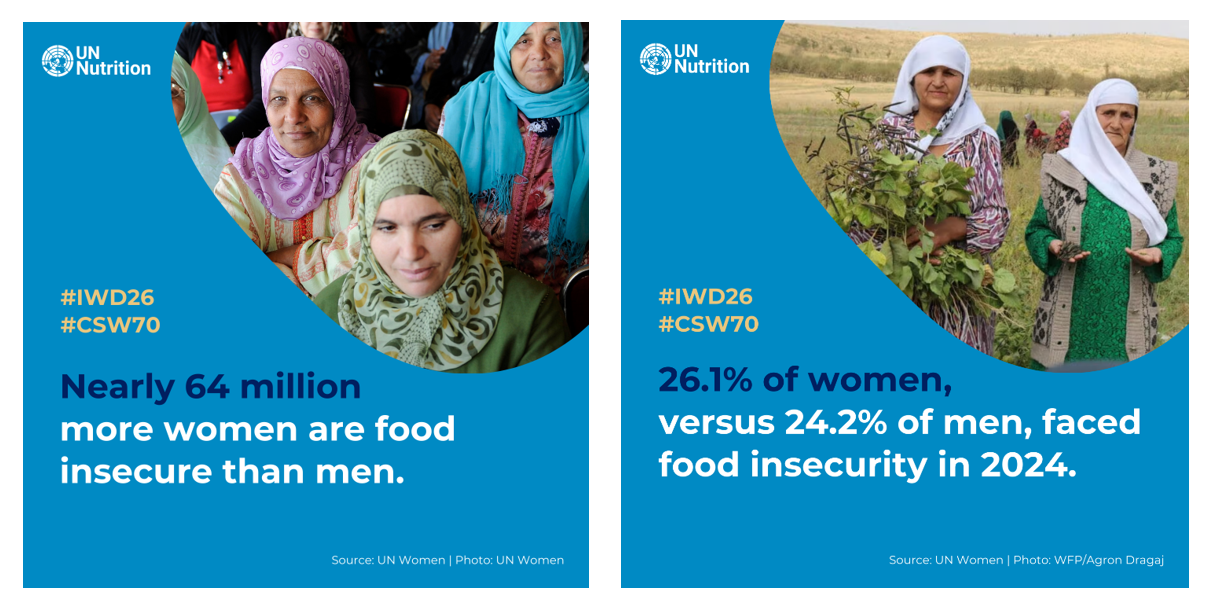
📌 Women experience higher rates of moderate or severe food insecurity than men: globally, 26.1% of women compared with 24.2% of men faced food insecurity in 2024 – a gap that widened in recent years.
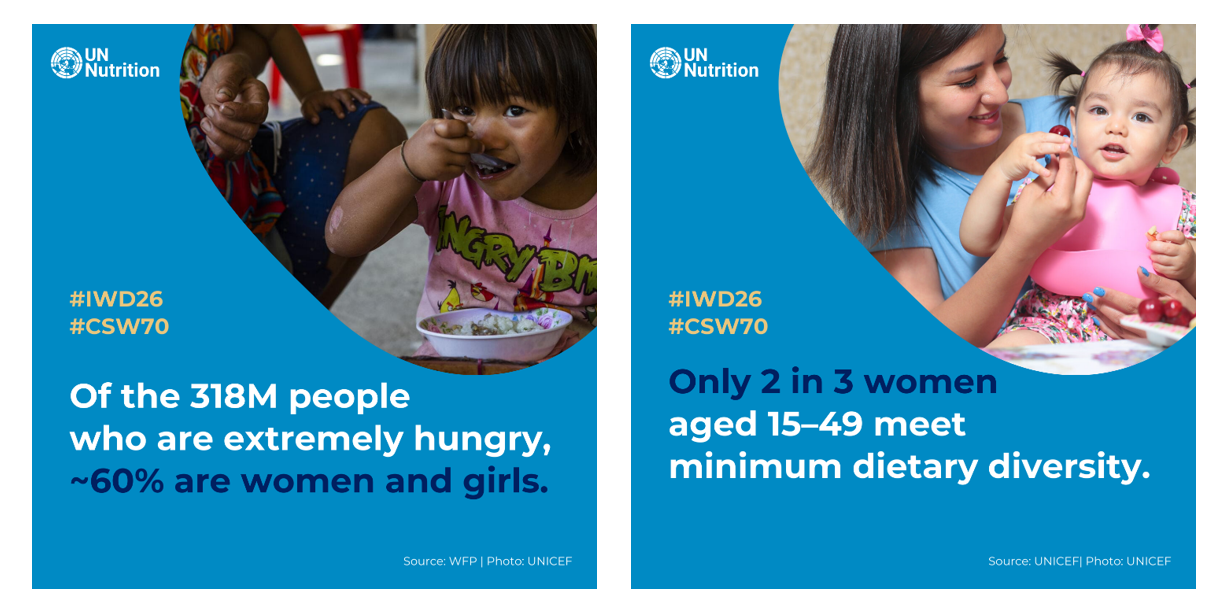
📌 Women and girls comprise nearly 60% of those who are extremely hungry, reflecting deep-rooted inequalities in access to food, resources and opportunities.
📌 Only two in three women aged 15–49 meet minimum dietary diversity, a crucial marker of nutritious diets.
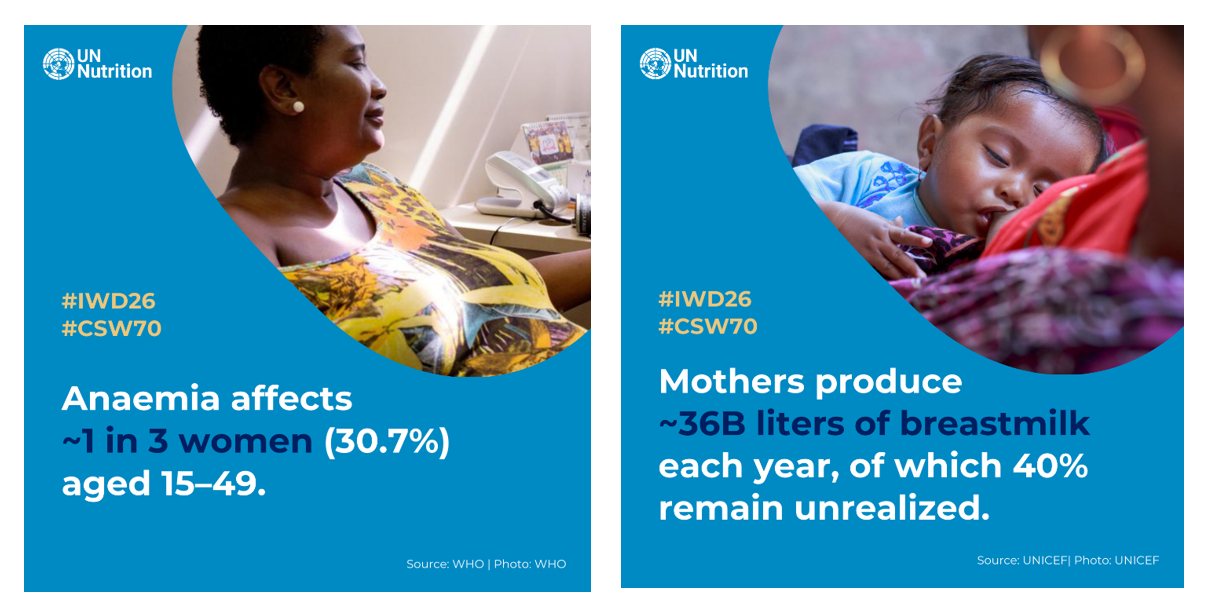
📌 Anaemia continues to affect nearly one in three women worldwide. In 2023, 30.7% of women aged 15–49 – and 35.5% of pregnant women – were living with anaemia, highlighting the urgent need to accelerate action on maternal nutrition.
📌 Globally, mothers produce around 36 billion liters of breastmilk each year – yet it’s not reflected in national GDPs. 40% (~22 billion liters) of its potential value is lost due to suboptimal breastfeeding conditions.
These facts remind us that nutrition crises are gendered. Structural barriers – from unequal access to land and markets to unpaid care burdens and social norms – shape women’s food security and nutrition outcomes.
UN Nutrition’s commitment
At UN-Nutrition, gender equality is a cross-cutting priority across all our work – alongside youth, climate resilience and fragile contexts – because transforming food systems demands inclusive, rights-based action.
Across the United Nations, gender equality is embedded in agency policies, strategies and programmes, as well as in broader UN gender architecture and accountability frameworks. Through its coordination role, UN-Nutrition helps bring together the expertise of UN agencies across food, agriculture, health, research, social protection and development to support countries in integrating gender equality into nutrition policies, programmes and food systems transformation. UN agencies' work and efforts include:
- Promoting women’s access to nutritious diets, resources and services, including land, finance, and nutrition interventions.
- Supporting maternal, infant and young child nutrition, including the protection, promotion and support of optimal breastfeeding.
- Strengthening women’s health and nutrition, including actions to reduce anaemia and improve diet quality.
- Advancing gender-responsive food systems and agricultural research, recognizing women’s central role in food production, food environments and household nutrition.
- Investing in programmes that reach women and girls, including food assistance, school meals, rural livelihoods and community nutrition services.
- Strengthening evidence, monitoring and nutrition assessment, including innovative approaches to better understand women’s and children’s nutritional status.
On International Women's Day 2026 and throughout CSW70, let’s elevate women’s leadership, agency and rights as central to nutrition, food security and sustainable development. When women have equitable access, families and communities flourish.