
UN-Nutrition’s Catalytic Funding mechanism is supporting six UN Country Teams to advance pilot initiatives that strengthen how UN agencies work together on nutrition at country level. Backed by funding from Irish Aid, this six-month “ignition phase” will generate practical country-driven learning on how UN entities can collaborate more effectively on nutrition using innovative, context-specific coordination approaches.
What does it take to achieve real, impactful progress for nutrition?
Across the UN system, agencies work every day to support countries in addressing malnutrition in all its forms. Yet achieving lasting impact requires more than parallel efforts: it requires coherent, coordinated action across sectors and partners.
This is the idea behind UN-Nutrition’s Catalytic Funding initiative, funded by Irish Aid, which provides targeted, short-term support to UN Country Teams testing innovative ways to strengthen collaboration for nutrition.
On 9 April 2026, representatives from the six participating countries – Burundi, Ethiopia, Madagascar, Mozambique, Myanmar and Viet Nam – came together with partners across the UN system, government representatives and Irish Aid to launch the UN-Nutrition catalytic projects. The meeting marked the start of a six-month“ignition phase” (until October 2026), during which country teams will pilot new approaches to joint action and generate practical lessons for others.
Catalytic Funding to spark collaboration
The Catalytic Funding mechanism supports UN Country Teams in experimenting with new ways of working together on nutrition. Rather than financing large programmes, the initiative focuses on unlocking collaboration by helping teams strengthen coordination mechanisms, align their strategies, and build shared evidence to guide decision-making. It is designed as a learning-driven process: countries test practical solutions, document their experiences, and share insights to inform stronger nutrition governance across contexts.
While UN-Nutrition coordinates the initiative globally, each project is implemented jointly by multiple UN agencies at country level and responds to coordination challenges and opportunities identified locally.
Through the Catalytic Funding programme, UN-Nutrition Secretariat helps bring UN agencies together, facilitates cross-country learning, and ensure lessons from country pilots inform broader efforts to strengthen coherent UN action on nutrition.
Country initiatives at a glance
Each country project reflects national priorities and contexts, yet all six initiatives share a common goal: strengthening multisectoral nutrition governance and improving the coherence of UN support.
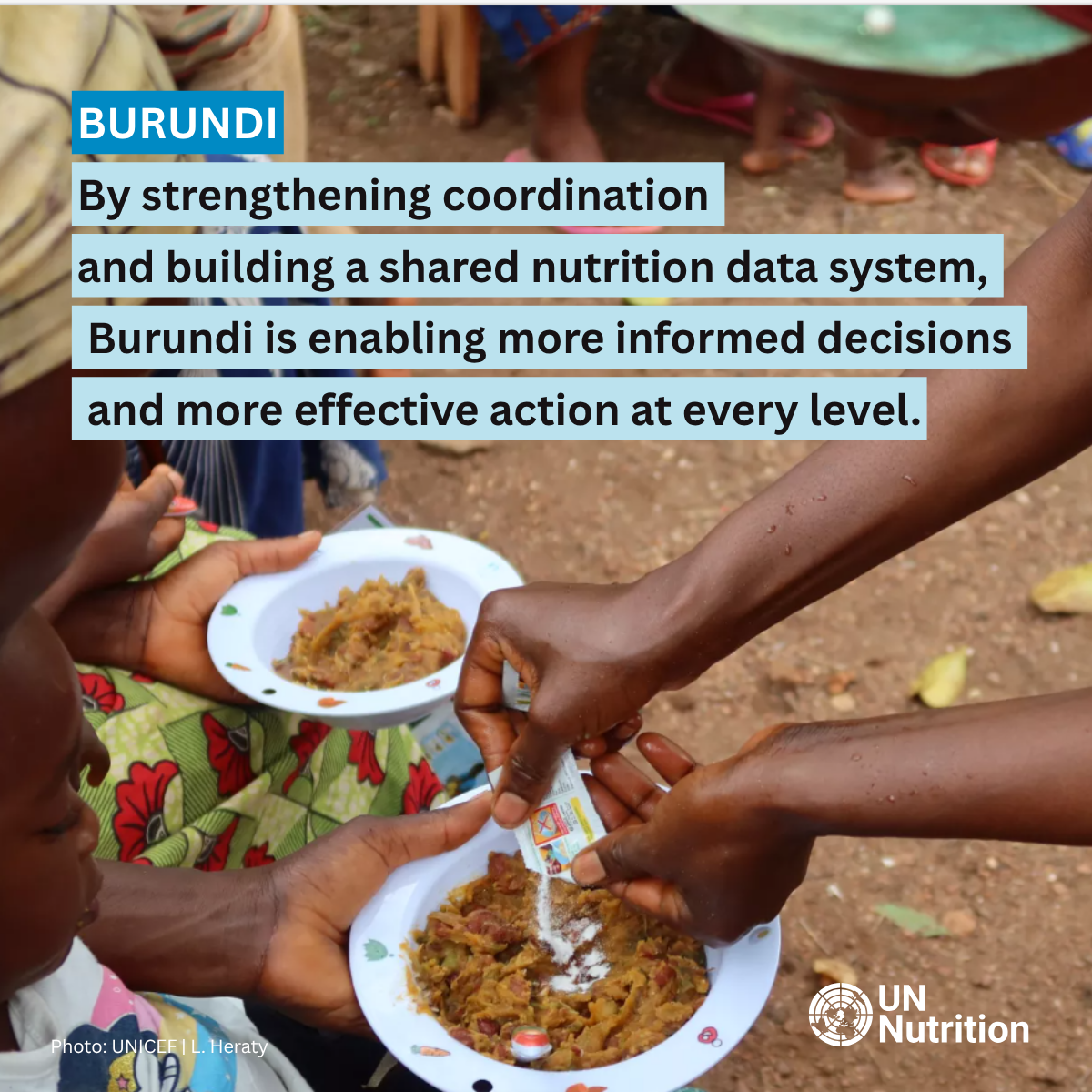
Burundi
In Burundi, a new multisectoral nutrition information platform is being piloted in four communes, bringing together data from multiple sectors to guide real-time decision-making. Capacity building at the communal level supports effective multisectoral coordination, joint planning, and routine monitoring.
Despite progress, nearly 30% of children remain affected by stunting, and fragmented information systems continue to limit coordinated decision-making. The initiative, led by FAO, UNICEF, WFP and WHO, in collaboration with six other UN agencies, aims to revitalize nutrition coordination, digitize nutrition information systems, and strengthen decentralized coordination platforms following the country’s recent territorial reform.
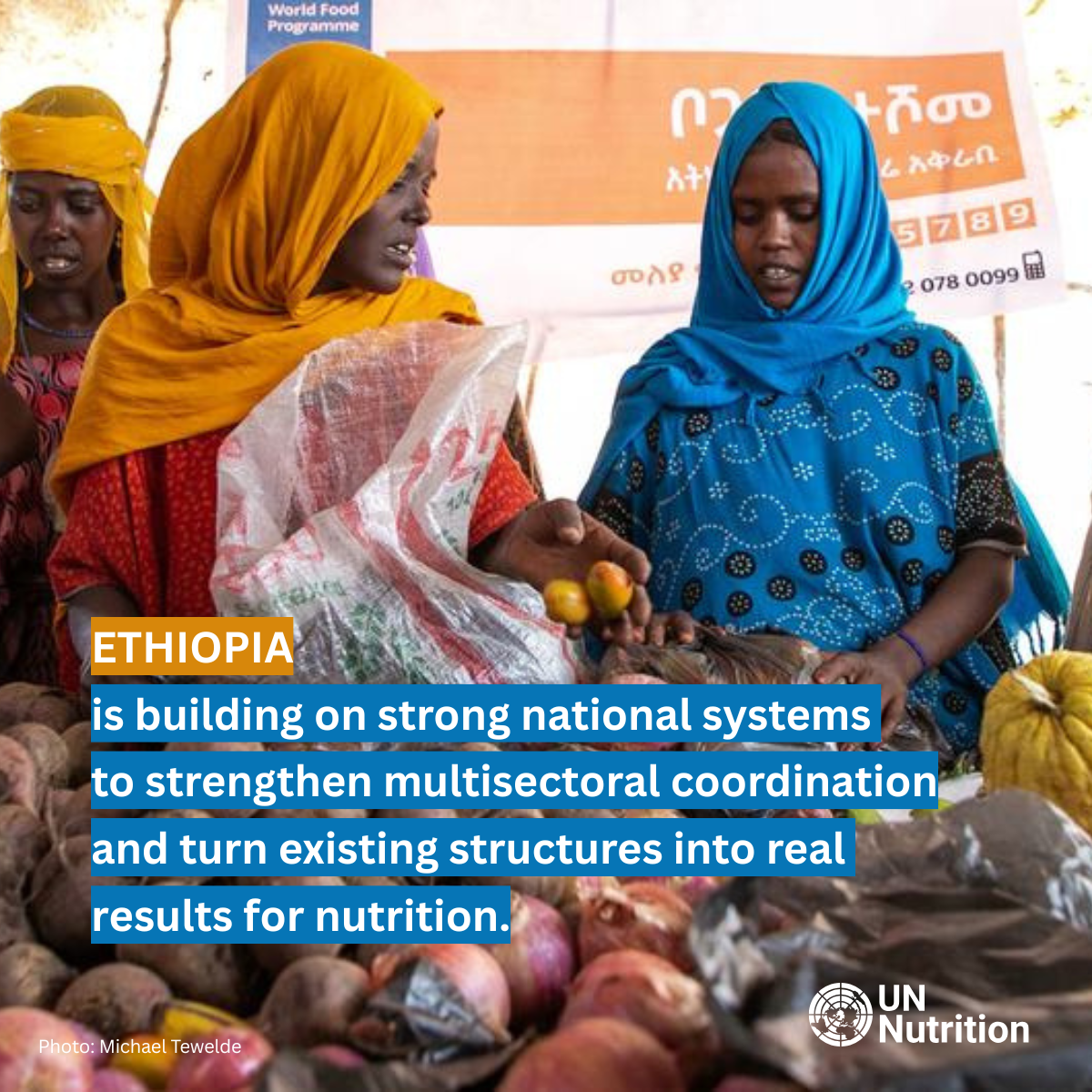
Ethiopia
Ethiopia’s initiative centres on a comprehensive diagnostic study of existing nutrition coordination and governance structures across federal and regional levels. While governance systems exist from national to district levels, multisectoral collaboration has not always translated into fully coordinated action. The project, implemented by FAO and UNICEF, will include sensitization sessions with national and regional entities to reinforce shared understanding, as well as the development of a national policy brief on “nutrition coordination for results” with actionable recommendations. A national dialogue will bring diverse sectors together, generating and endorsing recommendations for a stronger “One UN” nutrition approach, aligned with Ethiopia’s national nutrition strategy and SDG commitments.
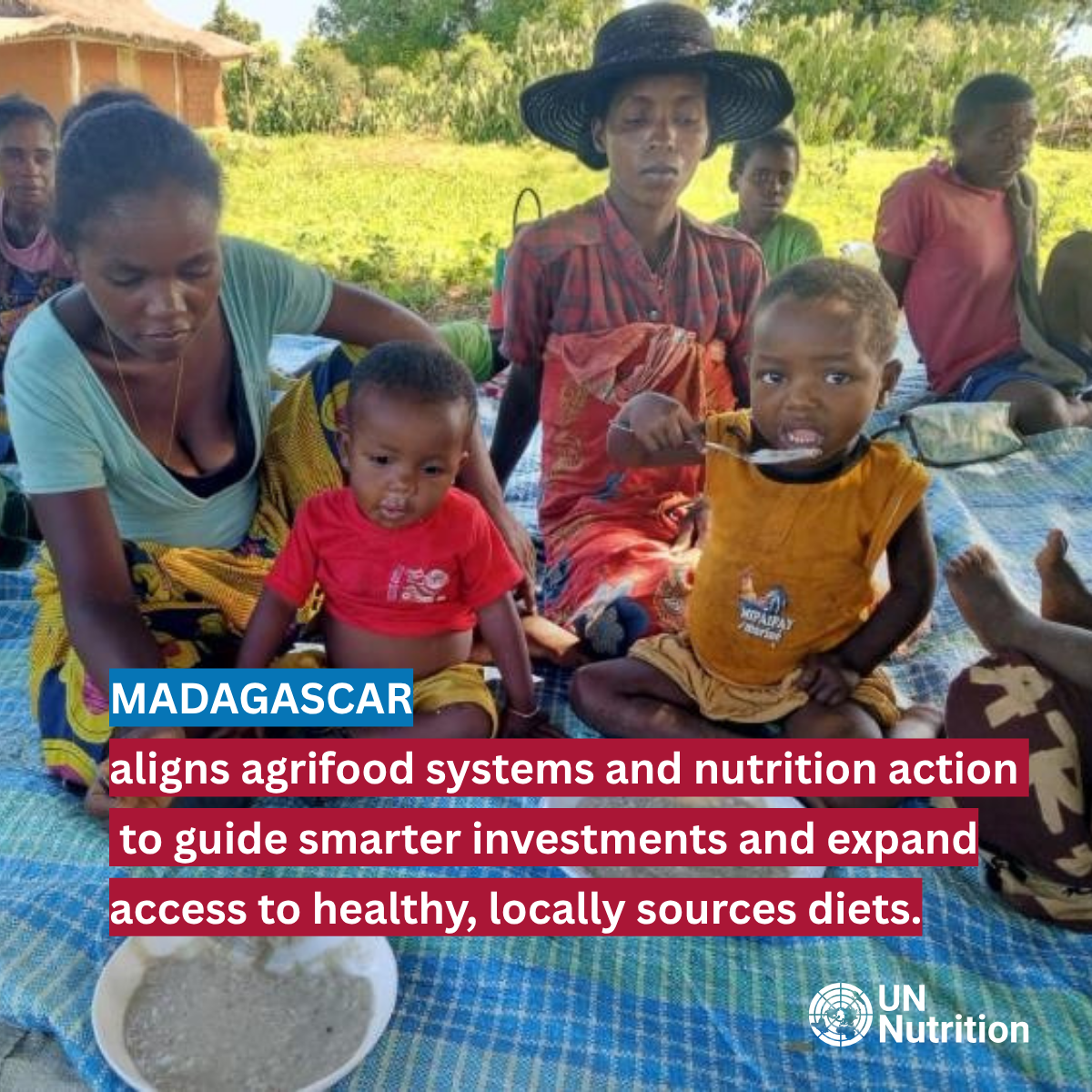
Madagascar
Working closely with the Office National de Nutrition (ONN), Madagascar is conducting joint diagnostics and mapping of nutrition-sensitive agri-food interventions, using UN inventory tools to identify gaps and opportunities across sectors. Capacity-building activities will support integrated “farm-to-fork” approaches linking agriculture, health and nutrition. Findings will feed into joint advocacy efforts and the development of investment cases based on cost-benefit analysis to guide funding toward the most effective interventions for diversified, nutritious diets. A donor and UN roundtable convened by ONN will align investments to support locally produced, nutritious foods. The initiative is implemented by FAO, UNICEF, WHO, and WFP.
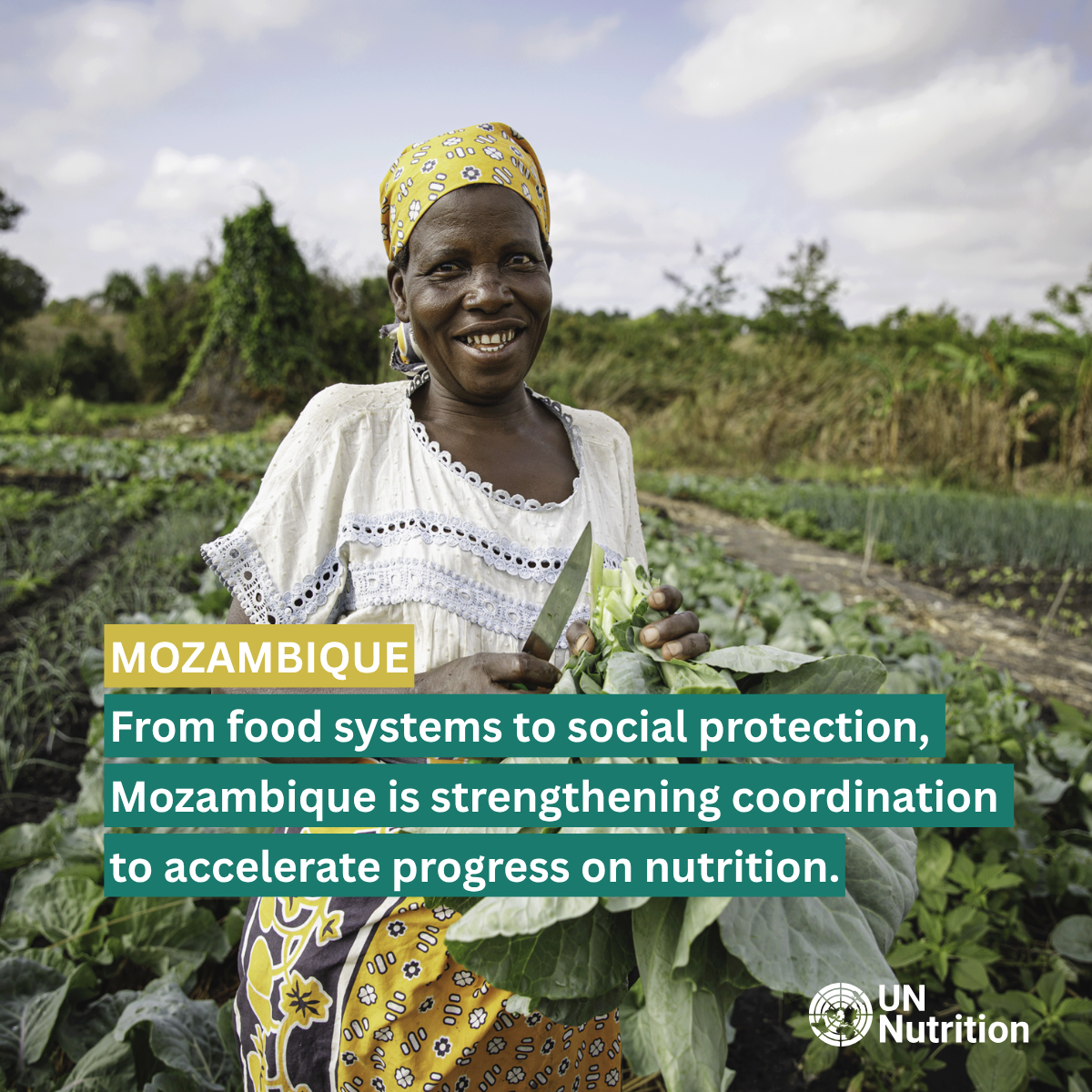
Mozambique
Mozambique is developing a new joint UN Nutrition Strategy (2026–2030) to accelerate progress in addressing a complex and multidimensional nutrition crisis – and to guide coordinated UN engagement in support of the country’s national nutrition plan. Nearly four in ten children are affected by stunting, anaemia rates remain high, and only 14% of children aged 6–23 months receive a minimum diverse diet, while obesity is rising in urban areas. The catalytic initiative brings together FAO, UNICEF, WFP, UNFPA and WHO with the Government of Mozambique to strengthen coordination and accountability across sectors.
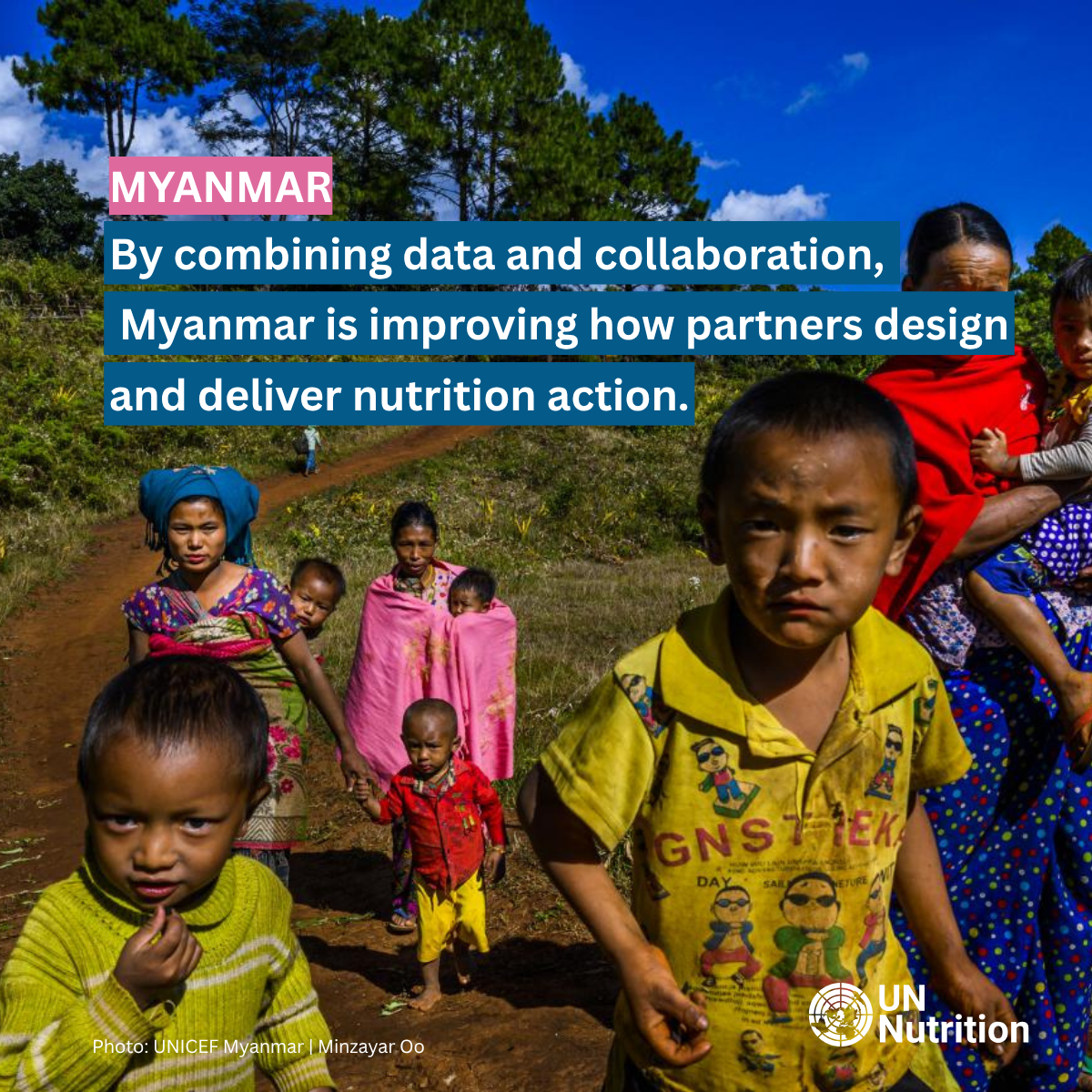
Myanmar
Myanmar is building a shared analytical base across agriculture, food security and nutrition, enabling more coherent programming across humanitarian and development contexts.
The initiative, implemented by FAO and UNICEF with endorsement from WFP, brings together UN partners to conduct a joint Data in Emergencies Monitoring (DIEM) exercise integrating key nutrition indicators into existing agricultural and food security monitoring systems. The findings will inform joint planning workshops, capacity-building activities and improved coordination across agencies.
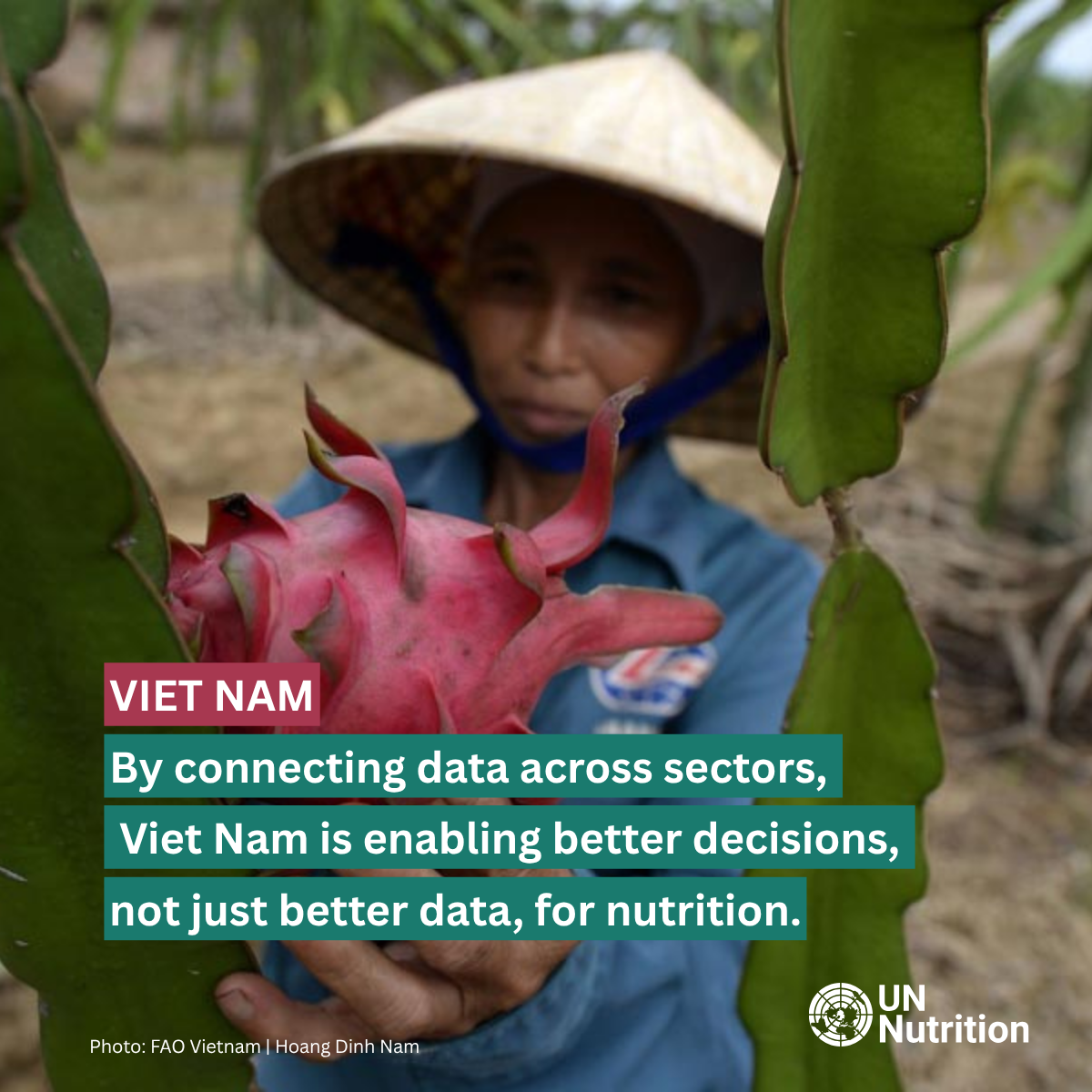
Viet Nam
Vietnam's initiative establishes a national, multisector, AI-enabled Food and Nutrition Data Hub to strengthen evidence-based policymaking and improve monitoring of nutrition and food safety. Led by FAO, UNICEF and WHO, the initiative will bring together data across sectors (i.e. food systems, agriculture, trade and food safety) to support integrated analysis and monitoring of nutrition outcomes. By mapping existing datasets and piloting Minimum Viable Architecture for the platform, the project aims to demonstrate how integrated data systems can support better decision-making and more effective nutrition policies.
Building a community of learning
Beyond the individual projects, all six initiatives share a common goal: strengthening multisectoral nutrition governance and improving the coherence of UN support.
The kick-off meeting provided the first opportunity for participating teams to exchange perspectives and present their projects. Just as importantly, it laid the foundation for a community of practice that will accompany the implementation period.
Looking ahead
The catalytic initiatives will run until October 2026. During this period, teams will exchange knowledge, reflect on challenges and successes, and document lessons learned – strengthening multisectoral nutrition action and reinforcing national leadership, while contributing to a growing evidence base on how coordinated UN action can better support national nutrition priorities.
The UN-Nutrition Catalytic Funding initiative is made possible through funding and support from Irish Aid. Find out more.